
When a Mold Detection Kit Feels Like The Only Way To Get Your Life Back
Jan 5th 2026
If you’re here, you’ve probably had that moment where your home stops feeling like a place to rest and starts feeling like a question mark, so you reach for a mold detection kit because you just want an answer.
Before anything else, a few very specific disclaimers. This blog is educational only and does not diagnose you with any mold-related illness, condition, or disease. Your symptoms can have many causes, and mold is only one possible factor. People also react differently to the same environment because bodies, histories, sensitivities, and immune systems vary a lot, so what feels intense for one person can feel like nothing for another.
Also, nothing in this post replaces medical care. If you feel unwell, especially if symptoms are severe, new, or worsening, please talk with a qualified clinician. If you are immunocompromised, pregnant, dealing with a child’s symptoms, or managing asthma, treat any suspected indoor mold issue as time-sensitive and get professional guidance.
Starting with a mold detection kit, not a spiral
Most people don’t wake up and decide to “become a mold person.” It usually starts small. A weird smell you can’t locate. A corner that never fully dries. A bathroom that keeps coming back with spots even after you “clean.”
Here’s the thing that makes this easier to frame. Mold is everywhere outdoors and indoors, but it only sets up shop in a home when moisture sticks around. That's why the most practical mindset is not “Which mold is it,” but “Where is the water coming from, and why isn't it drying.”
A helpful rule of thumb. If something gets wet and does not dry thoroughly within 24 to 48 hours, the risk of growth increases rapidly. That’s the window where you either win the situation or it starts turning into a bigger project.
Symptoms that can nudge you to look closer
Symptoms are tricky because they’re not a mold fingerprint. They are more like a nudge that says, “Pay attention, something about this environment might be bothering you.”
Common complaints people notice in damp or moldy environments often look like allergy or irritation patterns:
- Stuffy or runny nose, sneezing, postnasal drip
- Coughing, throat irritation, hoarseness that lingers
- Itchy, watery, or red eyes
- Skin irritation, rashes, or itchiness that seems random
- Headaches that feel more frequent at home
- Wheezing or chest tightness, especially for people with asthma
Some people also report less-specific, harder-to-pin-down feelings, such as fatigue, trouble focusing, or feeling “off.” Those symptoms have many possible causes, so the goal is not to self diagnose. The goal is to notice patterns and then verify the environment calmly.
The home clues that matter more than the internet debates
A lot of panic comes from the word “black mold.” Color is not the decision maker. Visible growth in any color indicates that moisture is present and that something needs to change.
A persistent musty or earthy odor is another significant signal. Sometimes it’s even more meaningful than a small visible spot, because it can suggest hidden growth behind walls, under flooring, in crawl spaces, or around HVAC condensation.
You can also watch for indirect signs of water problems:
- Peeling or bubbling paint
- Warped baseboards or swelling drywall
- Water stains on ceilings or walls
- Repeated condensation on windows
- A room that always feels humid compared to the rest of the home
If you notice physical changes like soft flooring, sagging, or bowing, don’t wait it out. That can move beyond an air quality issue and into a building integrity concern.
Questions that help you deduce whether the house is part of the problem
If you’re trying to connect health discomfort with the home, it helps to ask questions that point to timing and exposure, not fear.
Start here:
- Was there a leak, spill, roof problem, or flood that kept materials wet over 48 hours?
- Is there a musty smell in a room, closet, or near vents without visible mold?
- Are symptoms worse at home, particularly in the bedroom or main living area?
- Ever feel great after some time off, only to hit a wall once you're back?
- Did symptoms start or worsen after moving, renovations, or a water event?
- Are any household members high-risk (child, elderly, asthmatic, or immunocompromised)?
That “away for a few days” question matters because it’s one of the simplest pattern checks people can do without guessing species, counts, or lab jargon.
The best way to verify mold presence in the home without guessing
Verification works best when you pair common sense inspection with targeted testing. You’re trying to confirm whether your suspicions match reality, and then decide what to do next.
Start with the basics first:
- Find moisture sources. Look under sinks, around toilets, behind washing machines, near water heaters, along window frames, and in attics after rain.
- Check humidity. A simple hygrometer can tell you if indoor humidity is running high.
- Inspect the usual hiding spots. Behind furniture on exterior walls, inside closets on outside walls, around HVAC returns, under carpets near exterior doors.
Then you can use targeted tools to screen and get more precise data.
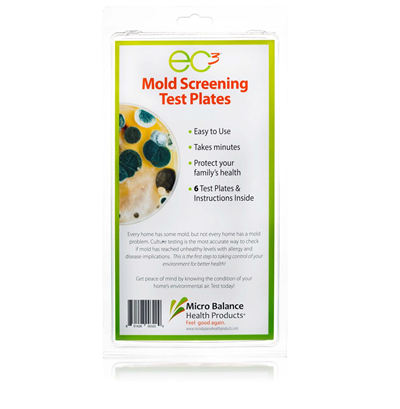
If you want a practical screening option to test for mold or detect it, use the EC3 Mold Screening Test Kit 6 Pack.
If your goal is broader, meaning you want a full setup that supports both detecting and addressing particles that may be lingering in the home and on clothing, the EC3 Sanitizer Fogger Home and Clothes Special Bundle is built for that kind of all in approach.
And if your suspicion is strong, especially when you have persistent symptoms and a clear water damage history, and you want a deeper level assessment for molds and mycotoxins, the Environmental Mold and Mycotoxin Assessment EMMA Combo is the more comprehensive option.
A quick note on expectations, because this helps people breathe again. Public health guidance often emphasizes that identifying the exact species usually does not change the first steps.
If you see or smell mold, the priority is removing growth safely and permanently fixing the moisture source. Testing is most helpful when it guides next decisions, confirms a suspicion, or helps you track whether a plan is working.
What matters after you confirm something
Once you confirm a problem, the next move is rarely “scrub harder.” It’s usually “dry faster, remove contaminated porous materials when needed, and stop the water from coming back.”
A few practical reminders:
- Porous items such as drywall, ceiling tiles, and carpet padding often cannot be thoroughly cleaned once they’re colonized. Removal is sometimes the safer route.
- Painting over affected areas traps the issue and can make it worse later.
- If the affected area is large, or you suspect HVAC involvement, professional remediation is usually the right call.
- For sensitive people, disturbing mold without proper containment can make the situation feel worse before it feels better.
Micro Balance products are made in the USA and formulated without synthetics, harsh chemicals, ammonia, or phthalates, using ingredients chosen to support a cleaner environment. Still, no product replaces fixing the moisture problem. Moisture control is the main character in every mold story, whether anyone likes it or not.