
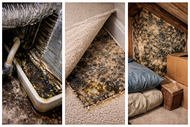
How a Home Mold Test Kit Helps Identify Potential Mycotoxin Risks Indoors
Dec 30th 2025
If you’re searching for a home mold test kit, I’m guessing this isn’t casual curiosity. It’s that stuck feeling. You’ve cleaned, you’ve aired things out, you’ve tried to “be normal”… and something still feels off at home.
Maybe it’s the smell. Maybe it’s the way you wake up congested. Maybe it’s the brain fog that gets weirdly better when you’re not in your space.
Before we go any further, I need to be extremely clear. This blog is not diagnosing you with any mold illness, mycotoxin illness, or any other illness. I can’t do that, and you don’t want a blog doing that to you anyway. People react differently to the same building because our bodies aren’t identical. Your symptoms could have many causes, and even if mold or mycotoxins are part of the picture, that doesn’t automatically mean they’re the only part. If you’re feeling seriously unwell, if symptoms are new or escalating, or if you’re immunocompromised, pregnant, or managing asthma, please involve a qualified clinician and consider professional environmental help sooner rather than later.
Now let’s talk about what people actually notice and what you can do next without spiraling.
Why Many Homeowners Turn to a Home Mold Test Kit First
Mycotoxins are chemical compounds produced by certain molds under the right conditions. The important detail is the conditions. It’s not just “there’s mold somewhere.” It’s usually tied to chronic, saturated moisture that lingers in building materials that molds love, like drywall paper, wood, and other cellulose based stuff.
That’s why a single tiny spot in a shower that gets cleaned quickly isn’t the same situation as a slow leak inside a wall for months. One is annoying. The other can turn into a whole house issue if airflow spreads particles through vents.
Symptoms That May Be Associated With Mycotoxin Exposure
These symptoms are not proof. Think of them as potential flags that warrant closer examination of the environment, especially if they align with time spent at home.
People often report:
- Pressure type headaches or headaches that seem to show up at home
- Brain fog, slower thinking, trouble focusing, memory slips
- Fatigue that feels disproportionate to your actual schedule
- Mood changes that feel sudden or unusually intense for you
- Dizziness, vertigo, feeling off balance
- Chronic congestion, throat irritation, coughing, wheezing
- Skin irritation, rashes, itching that doesn’t make sense
- Digestive discomfort like bloating, stomach pain, new food sensitivities
Here’s the part people don’t talk about enough. Many of these can also come from stress, sleep issues, seasonal allergies, viruses, hormone shifts, indoor dust, or other environmental irritants. So the goal isn’t to label yourself. The goal is to notice patterns and verify the home.
Questions That Can Raise Suspicion of Mycotoxins in the Home Environment
When you’re trying to figure out whether your home is involved, questions about moisture history and timing are often more useful than Googling “symptom lists.”
Ask yourself:
- Has the house had any leak, flood, roof, or plumbing issues that kept materials wet for over 48 hours?
- Persistent musty smell you can't locate?
- See water stains, bubbling paint, warped trim, or window condensation?
- Do symptoms get worse when you’re home, especially in a specific room like a bedroom or office?
- Do you feel noticeably better after being away for a few days, then worse again after returning?
- Did symptoms start after moving in, after a renovation, or after a known water event?
- Do you run central air conditioning a lot, and have you ever suspected condensation or musty air coming from vents?
That HVAC piece matters because air systems can both collect moisture and distribute particles. If there’s a problem inside that system, it can turn one damp area into a whole house exposure issue.
Common Areas of the Home Where Risk Is Often Overlooked
This is where a home mold test kit earns its keep. Not as a panic purchase, but as a way to stop guessing and start getting information you can act on.
The most innovative approach is layered:
1) Start with moisture reality, not mold drama
Do a slow walk through your home with a practical eye.
Check under sinks. Look behind the toilets. Peek behind the washing machine. Scan ceilings after rain. Look at window frames. Smell closets, especially on exterior walls. Notice if one room always feels more humid.
If you have a basic hygrometer, use it. High humidity keeps the cycle going.
2) Screen for mold where you actually live
If you want a focused screening option to detect mold, use the EC3 Mold Screening Test Kit 6-Pack. It’s designed to help you collect useful information without guessing what’s behind walls.
This is helpful when you have “I think something’s going on here” signals, like odor, repeated dampness, or symptoms that track with the home.
3) If you want the all in home and clothes approach
Sometimes the stress isn’t just “Is it in the house.” It’s “Is it on everything I own.” Clothes, soft items, closets, laundry areas. That’s a real mental load.
If you want a bundled setup that supports both detecting and addressing particles in your home and on clothing, the EC3 Sanitizer Fogger Home and Clothes Special Bundle is the more comprehensive kit style option.
Important reality check. No kit replaces fixing moisture. If a leak is still active or humidity stays high, the problem will keep trying to reboot.
4) When suspicions are strong and you want mold plus mycotoxins assessed
If you have a clear water damage history, persistent musty odor, symptoms that strongly track with the building, or you’re trying to get more detailed confirmation beyond basic mold presence, a combined assessment can make sense.
That’s where the Environmental Mold and Mycotoxin Assessment EMMA Combo fits.
This is the option people tend to choose when they’re past “maybe” and into “I need clarity because this is affecting my life.”
Interpreting Results Without Jumping to Conclusions
If your testing and home clues point toward a problem, the next step isn’t usually to obsess over species names. Public health guidance tends to emphasize something simpler: clean what you can safely clean, remove what can’t be truly cleaned, and permanently fix the moisture source.
A few grounded reminders:
- If something gets wet and stays wet for 24 to 48 hours, treat that area as a priority.
- Porous materials such as drywall and carpet padding often require removal if contaminated.
- Painting over mold is a trap. It hides it. It doesn’t solve it.
- Larger affected areas or HVAC involvement often call for professional remediation.
And if you’re sensitive, don’t handle heavy cleanup without proper precautions. Stirring things up can make you feel worse short term.
You’re not dramatic for wanting answers. You’re tired of guessing. A home mold test kit can be the line between “I feel crazy” and “Okay, here’s what’s happening and here’s what I’m doing next.”