
Clean Home? Check with a Mold Detection Kit
Sep 21st 2026
A mold detection kit can be useful even when your home looks spotless, because mold problems are not always visible to the eye. Mold spores naturally exist in indoor and outdoor environments, traveling through the air and settling on surfaces throughout a home. Most of the time, they remain harmless and inactive. Give them moisture, a suitable surface, and enough time, however, and those tiny spores can begin growing in places you may never think to check.
Why Mold Can Be Present in a Clean Home
A clean house is not necessarily a mold-free house. Regular cleaning removes dust, dirt, and visible buildup, but it cannot stop microscopic mold spores from entering through doors, windows, HVAC systems, clothing, shoes, pets, and other everyday sources.
Spores are extremely small and lightweight. They can float through indoor air, land on furniture, settle into carpeting, or collect in areas such as basements and attics. Their presence alone does not automatically mean that you have an active mold problem. What matters is whether those spores encounter an environment that allows them to grow. And moisture is usually the deciding factor.
Homes contain plenty of materials mold can use as a food source, including wood, paper-backed drywall, fabrics, insulation, and household dust. Oxygen is readily available as well. Once excess moisture enters the picture, conditions can quickly become favorable for growth.
A slow plumbing leak, roof problem, condensation around windows, damp basement, overflowing appliance, or high indoor humidity can create the right conditions. Sometimes the moisture is obvious. Other times, it remains hidden behind a wall, beneath flooring, or inside cabinetry.
Mold Growth Is Often Hidden
One reason homeowners overlook mold is that growth can develop long before it becomes visible. You may notice a musty smell without seeing discoloration. A wall might look perfectly normal even though moisture has been collecting inside it. Mold can also grow behind furniture, under carpeting, around HVAC components, or beneath sinks where regular cleaning does not reach. A visual inspection may be useful, but still incomplete.
Mold spores can also move from one area to another. Opening a door, operating a fan, or running an HVAC system may move particles through the home. This does not necessarily prove active growth in every room, but it shows why mold assessment involves more than looking for black or green patches on a wall.
A Mold Detection Kit Can Be Helpful
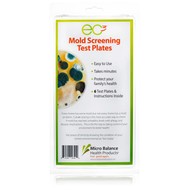
Testing gives homeowners another source of information when determining whether elevated mold levels may be present. Our EC3 Mold Screening Test Kit, for example, is designed to help screen indoor air, objects, and surfaces for mold growth. The kit includes multiple test plates, allowing homeowners to check more than one location or item within the home.
The process is designed to be relatively simple. After testing, the plates are left for a specified period so homeowners can observe whether mold colonies develop. This can help identify areas that may deserve closer attention.
It is important to understand what this type of screening can and cannot tell you. A home test is not the same as a professional inspection or laboratory diagnosis. Growth on a plate may indicate that mold spores are present, but it does not automatically reveal the entire source, extent, or cause of the problem.
How Mold Testing Fits Into the Micro Balance Mold Protocol
We approach mold as a problem that involves more than simply wiping down a suspicious surface. The broader goal is to identify possible exposure, deal with sources that support mold growth, clean affected areas, and reduce the chances of recurring contamination. Screening is an important starting point because it gives homeowners information about what may be happening inside the environment.
If testing suggests a potential issue, the next step is to look for moisture. That may mean checking plumbing, roofing, bathrooms, basements, windows, air-conditioning equipment, and other areas where water can collect. Finding and correcting the moisture source is critical. Cleaning visible mold without fixing the leak or humidity problem often allows the issue to return.
Cleaning and treatment are also part of the process. Depending on the circumstances, contaminated materials may need to be cleaned, treated, or removed. Heavily affected areas, recurring problems, or situations involving vulnerable occupants may warrant professional assessment and remediation.
Testing can also be useful after cleaning. You shouldn't assume that the environment has improved because visible growth is gone. Homeowners may choose to screen again as one additional way to monitor conditions.
Clean Does Not Always Mean Clear
Mold is part of the natural environment, so the goal is not to create a home with absolutely no spores. That would be unrealistic. The more practical objective is to prevent spores from finding the damp conditions they need to establish active growth indoors.
A home can look clean while hidden moisture and airborne spores tell a different story. Micro Balance has a screening approach that gives homeowners a practical way to investigate suspicious areas and decide whether further action may be needed. For people who want more information about what is happening in their indoor environment, a mold detection kit can be an important part of a broader mold prevention and response plan.